
Physician-built tools,
ready when you are.
The medical system rarely gives you time to prepare, follow what is happening, or understand the language being used around you. Doc Envoy®’s digital products were built to put that time back, on your side of the equation.
Each tool below was designed by a board-certified internal medicine physician. Free downloads for situations you can handle on your own. Paid products for situations that call for more structure, more depth, or a tool that stays with you through a longer stretch.
Free Tools
Six physician-built tools you can download and start using today. Each one is free, and downloading any of them adds you to occasional Doc Envoy updates. You can unsubscribe at any time.
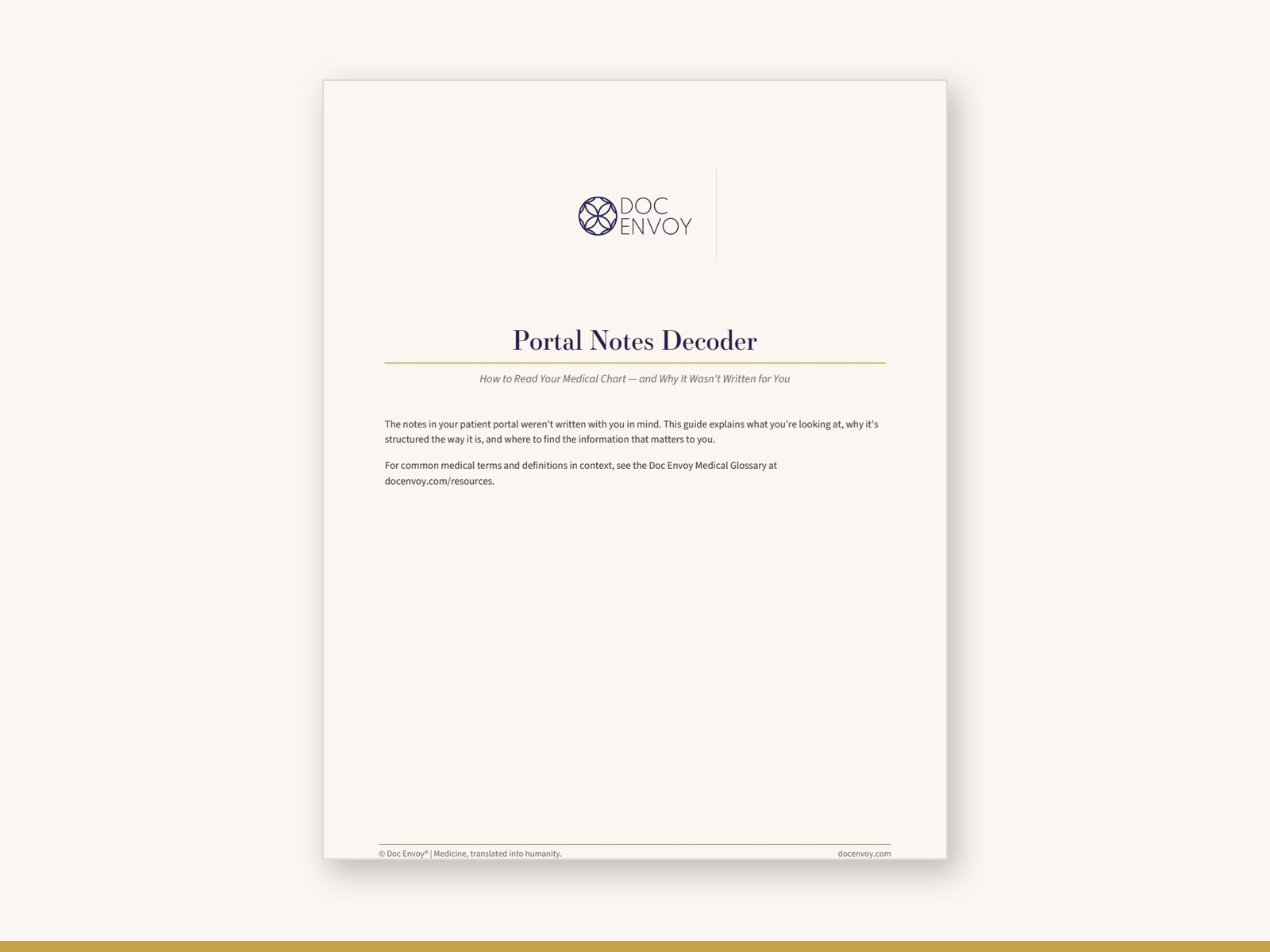
Portal Notes
Decoder
A physician's guide to reading your medical chart and understanding why it wasn't written for you. It explains how notes are structured, why some words mean the opposite of what you would expect, how to read your labs and imaging reports, and where to find the part that actually matters. The structural understanding a physician brings to a chart, in your hands.
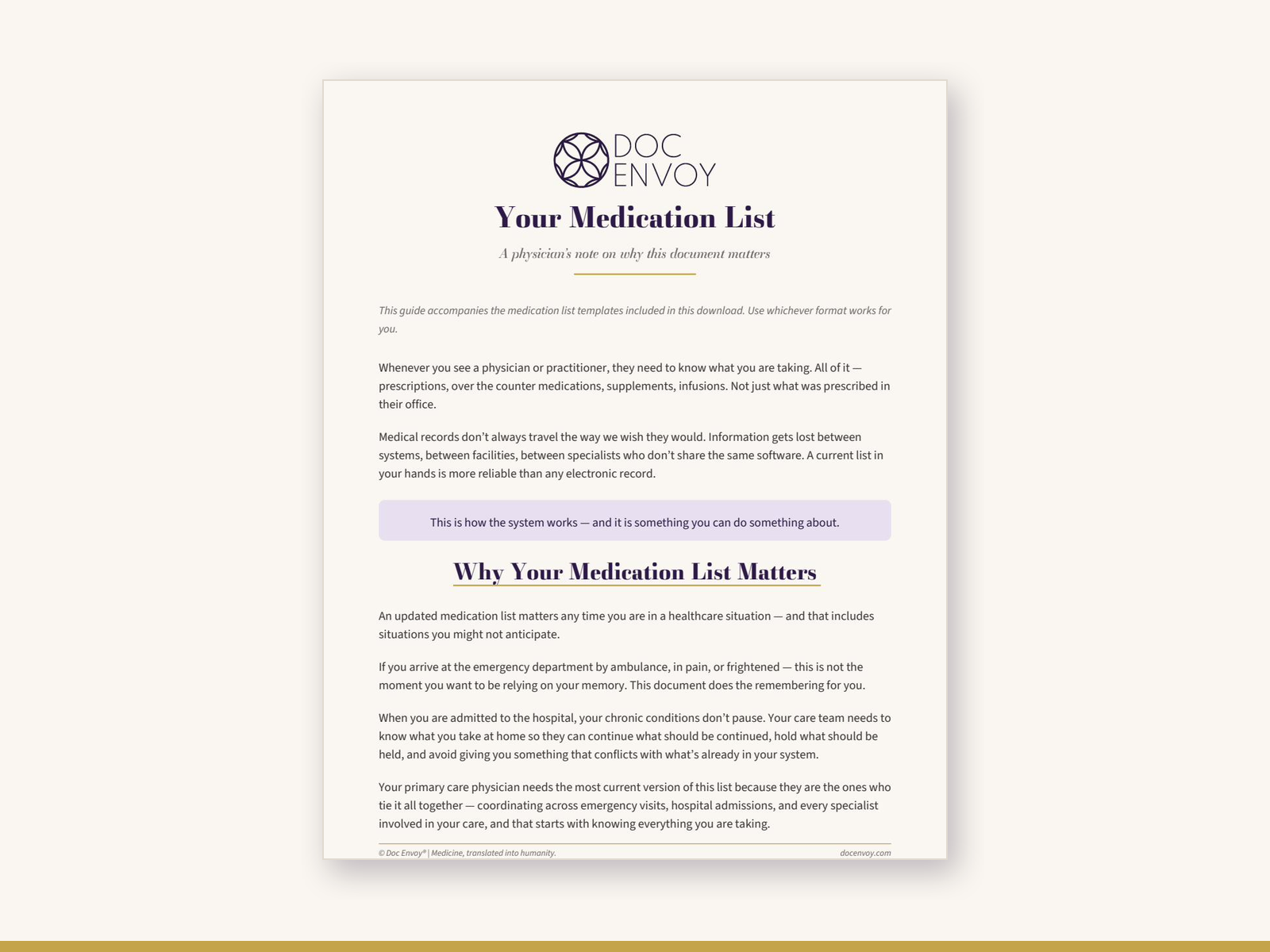
Your Medication
System
A physician's explainer on a problem most people do not know they have: your medical records do not reliably travel between systems, facilities, and specialists, which means the current list in your hands is often more reliable than anything in a computer. It comes with a comprehensive template that captures what your care team actually needs, not just prescriptions, but supplements, infusions, what you recently stopped, and the reactions that matter. Available as a fillable PDF and a shareable spreadsheet.
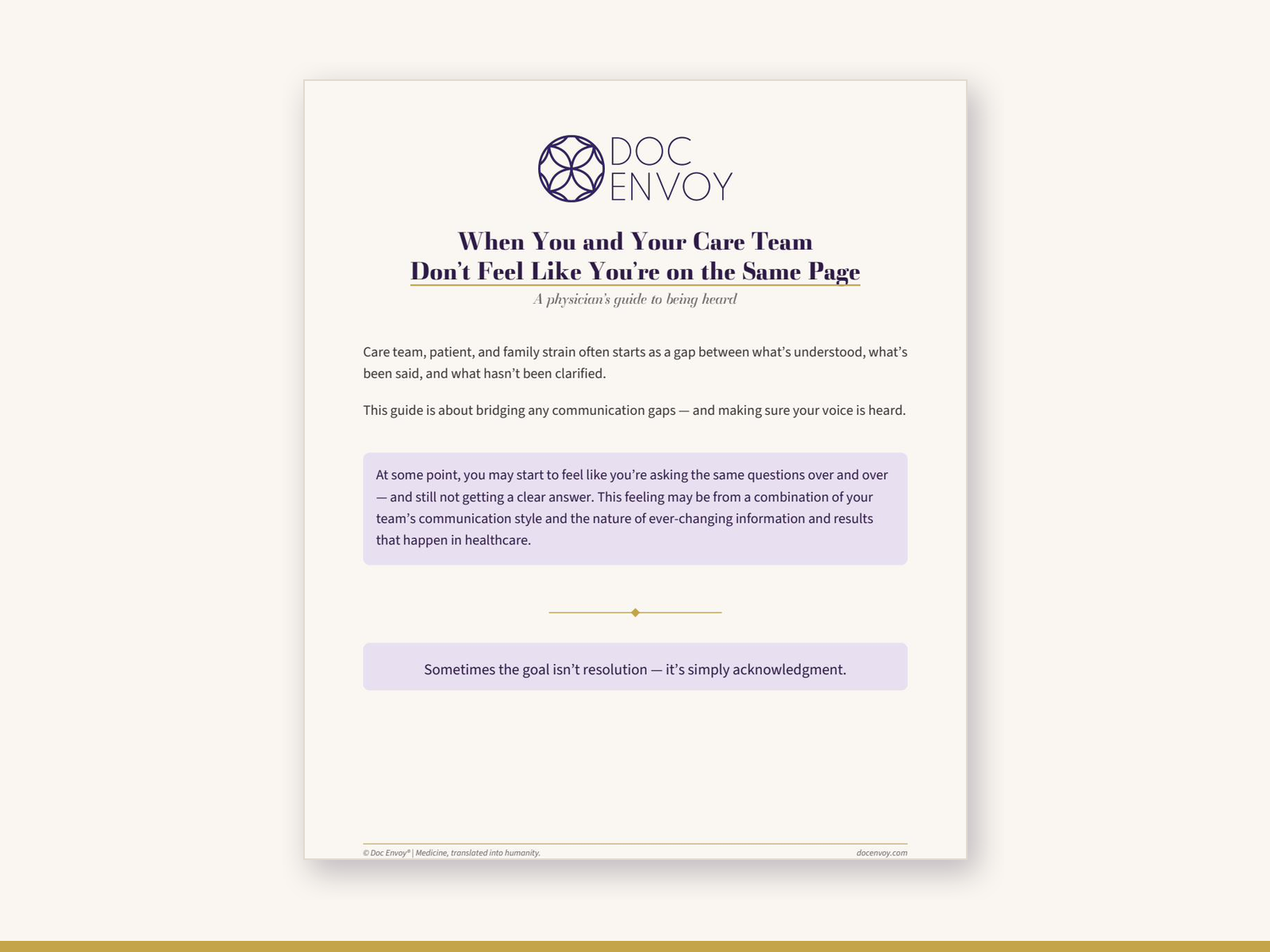
When You and Your Care Team Don't Feel Like You're on the Same Page
A physician's guide for the moments when you feel like you are asking the same questions and still not getting clear answers. It explains why those gaps open up between you and your care team, why the timelines rarely match what you expect, and how to get back to a shared understanding, with a preparation tool for collecting your thoughts before a conversation with your care team.
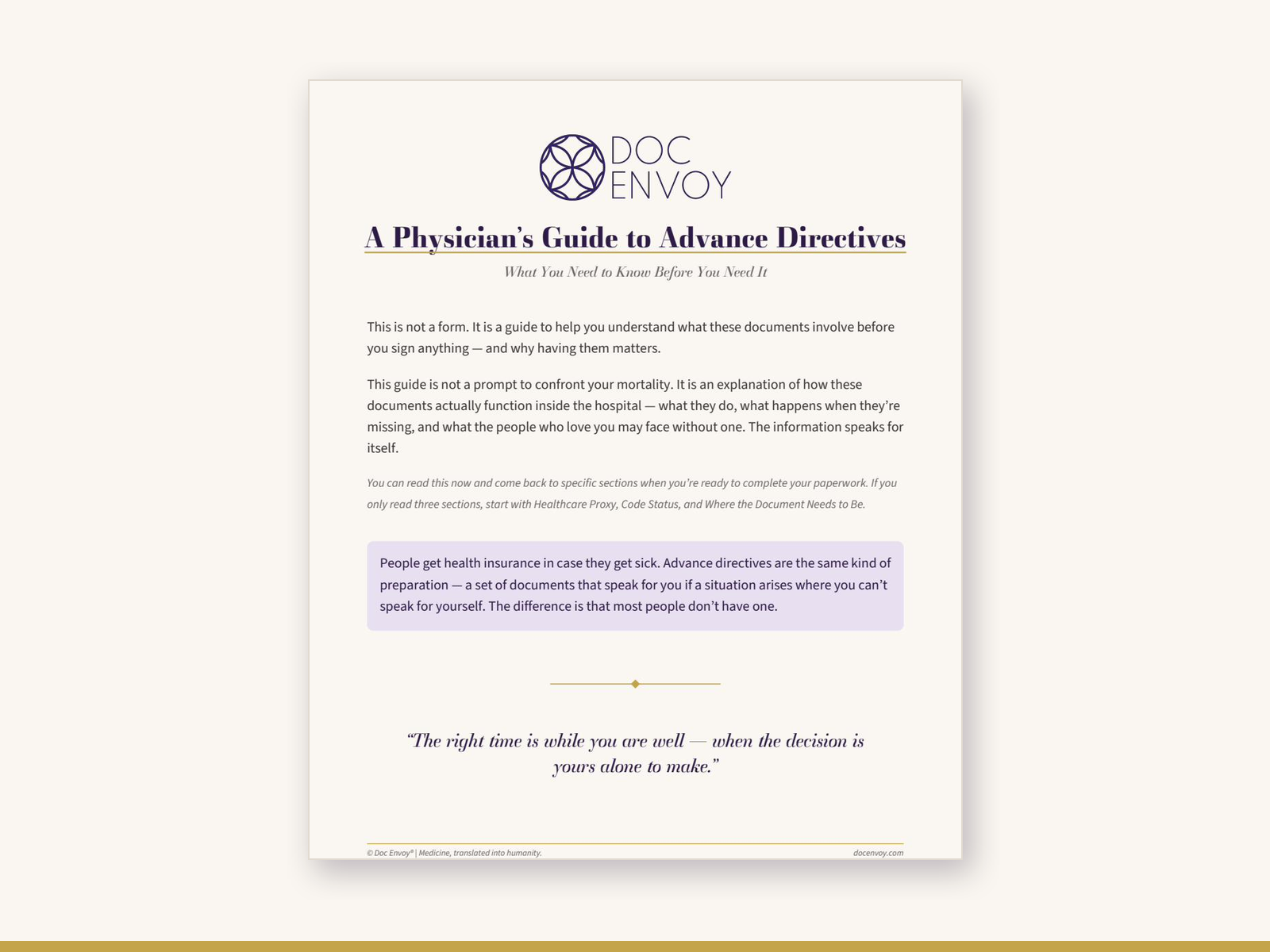
Advance Directives
Guide
A physician's guide to how advance directives actually function inside the hospital: what a healthcare proxy can and cannot do, what code status means, what happens without a directive, and where the document needs to be so the right people can find it. Not a form, and not a prompt to confront your mortality. An explanation of how these decisions really work.
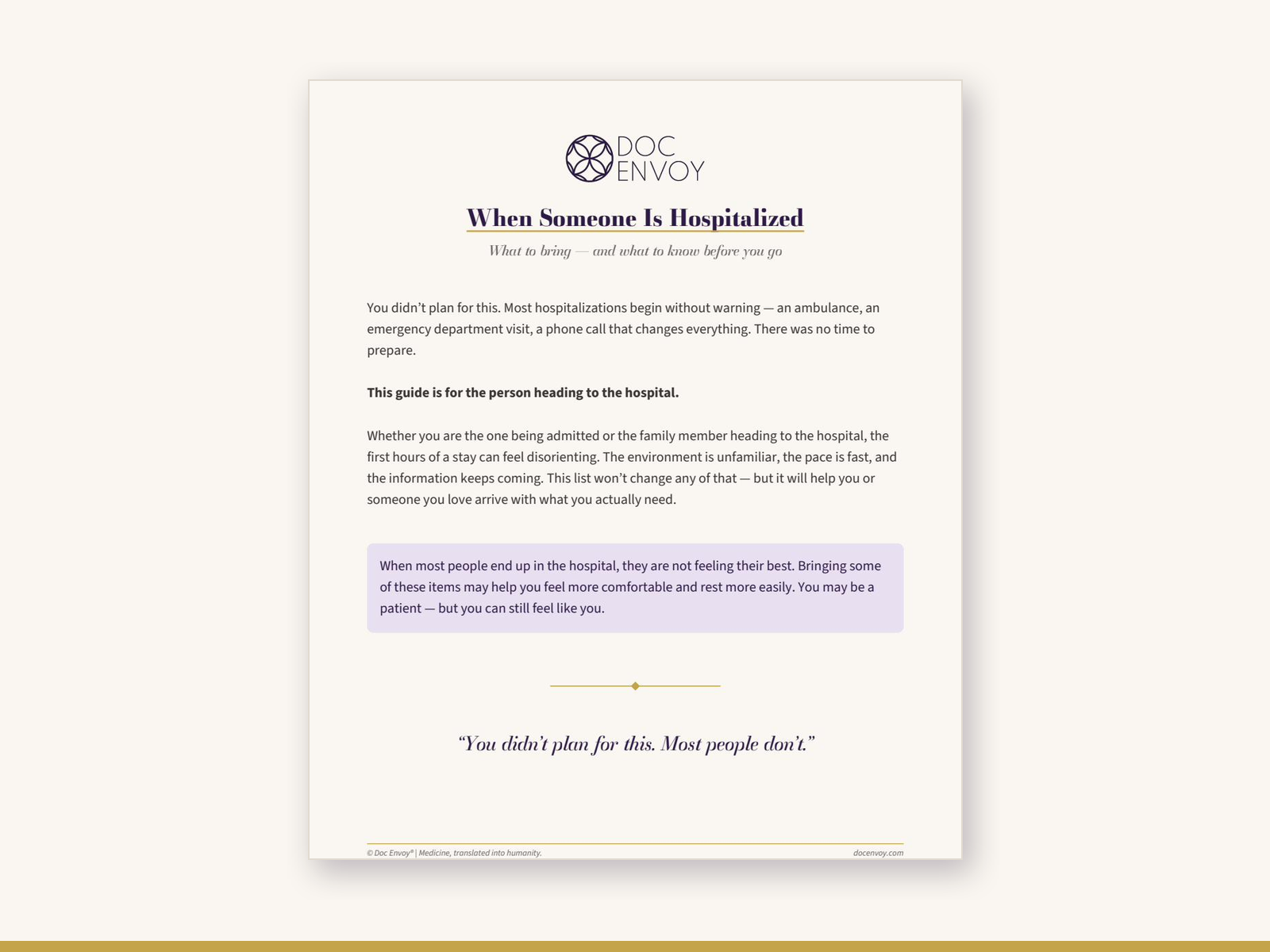
When Someone Is
Hospitalized
Most hospitalizations begin without warning. This is a physician guide for the unplanned hours and days that follow, with insider notes on what to bring, what the care team will need, and what makes the stay more bearable. Includes a one-page summary checklist you can print and bring with you.

Symptom
Translator
A hospitalist's guide to how physicians actually listen when you describe a symptom: not waiting for you to name a diagnosis, but building a picture from your story. It walks through what physicians want to know about chest pain, dizziness, shortness of breath, headache, fatigue, and abdominal pain, so you can describe what your body is doing in the way that helps them help you.
Doc Envoy Store
Five physician-designed products for situations where a checklist is not enough. Each one was built from years of watching what patients and families wished they had known sooner, asked sooner, or had in their hands during the experience itself.
* Each Doc Envoy product comes with brief, optional pre- and post-use questionnaires. Your honest feedback helps us understand what works, so we can keep improving the tools we build for patients and families.
The Hospital Insider's Guide
A 78-page physician orientation to how hospitals actually work.
The Hospital Insider’s Guide is a physician’s orientation to what happens during a hospital stay: what to expect, what to ask, and what physicians and nurses know about how the system runs that patients and families rarely know in advance. It is designed to be read before, during, or after a stay, depending on where you are.
What’s included:
- 78-page digital PDF guide, designed for reading on a tablet, laptop, or e-reader
- Physician Insider callouts throughout, explaining how hospital workflow operates from the inside
- Multiple clinical and operational subsections, cross-references between topics, and a usable index
- Built to formal PDF accessibility standards, so it works with screen readers and assistive technology
Price: $46
The Hospital Day
A visual guide that shows what the patient, the nurse, and the physician are each doing at the same moment in a hospital day.
The Hospital Day shows three people doing three different things at the same time. At any given hour of a hospital day, the patient is in one mode, the nurse is in another, and the physician is in a third. This guide overlaps all three on one clock face, so you can see at a glance who is doing what at any moment and time your questions, your rest, and your expectations accordingly.
What’s included:
- Overlapping clock faces for the patient, the nurse, and the physician
- Plain-language explanation of how to read the overlaps and use them in practice
- 14-page digital PDF you can keep open on a phone or tablet at the bedside
Price: $29
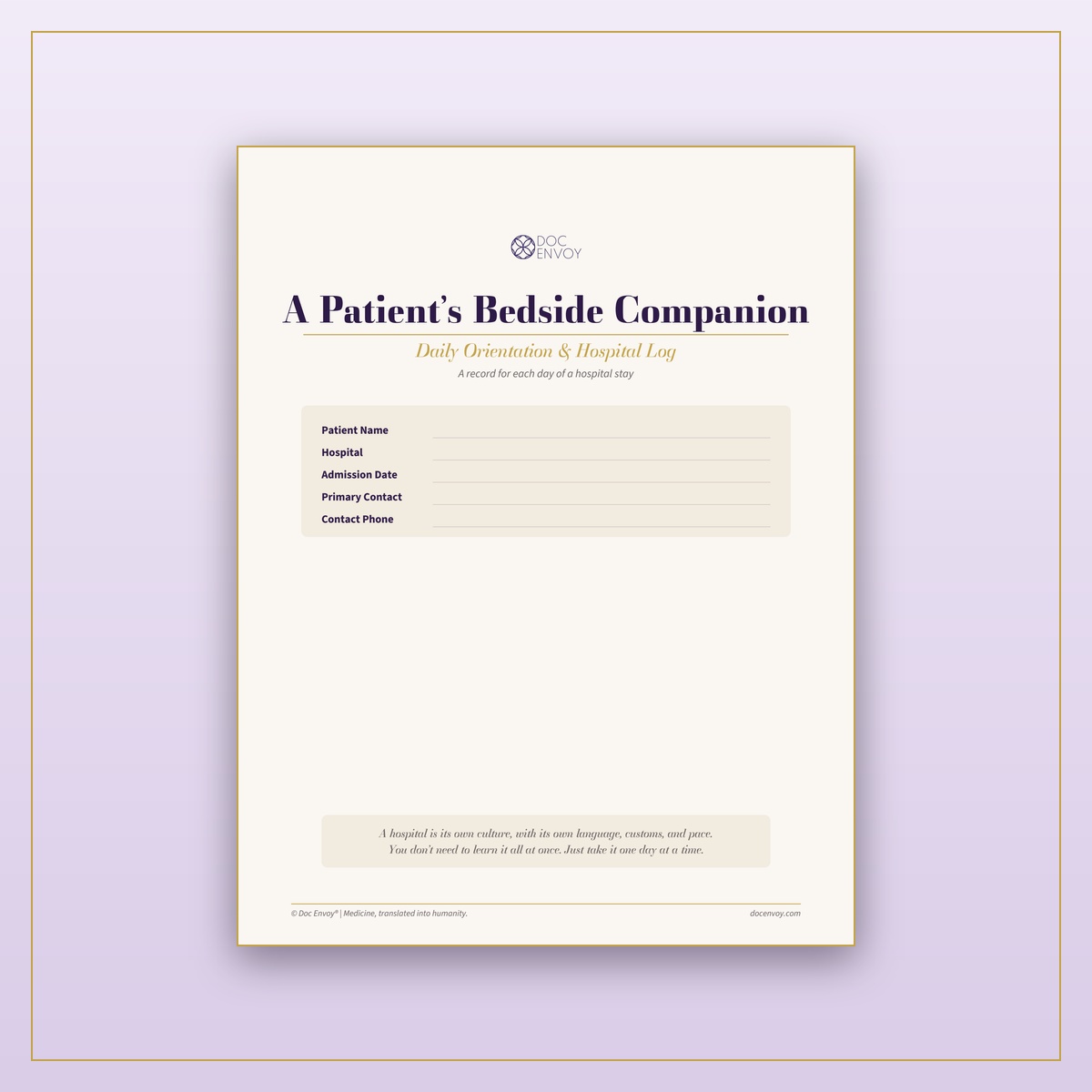
A Patient's Bedside Companion
A companion the patient uses at the bedside during a hospital stay.
A Patient’s Bedside Companion is a structured place to keep what you are hearing, what you are noticing, and what you want to ask while you are in the hospital. It is designed to be in your hands during the stay, so the information you need is in one place and the questions you have are ready when your care team is.
What’s included:
- Four complete day sets, with structured pages for tracking what is happening each day
- A care team section so you know who you are speaking with at each shift change
- Notes pages for what falls outside the daily structure
- “Things You Can Consider Saying to Your Care Team,” a section of patient-voiced phrases for asking for what you need
- A fillable PDF you can type into or print at home; a longer stay is covered by saving a second copy of the file or printing additional day sets
Price: $29
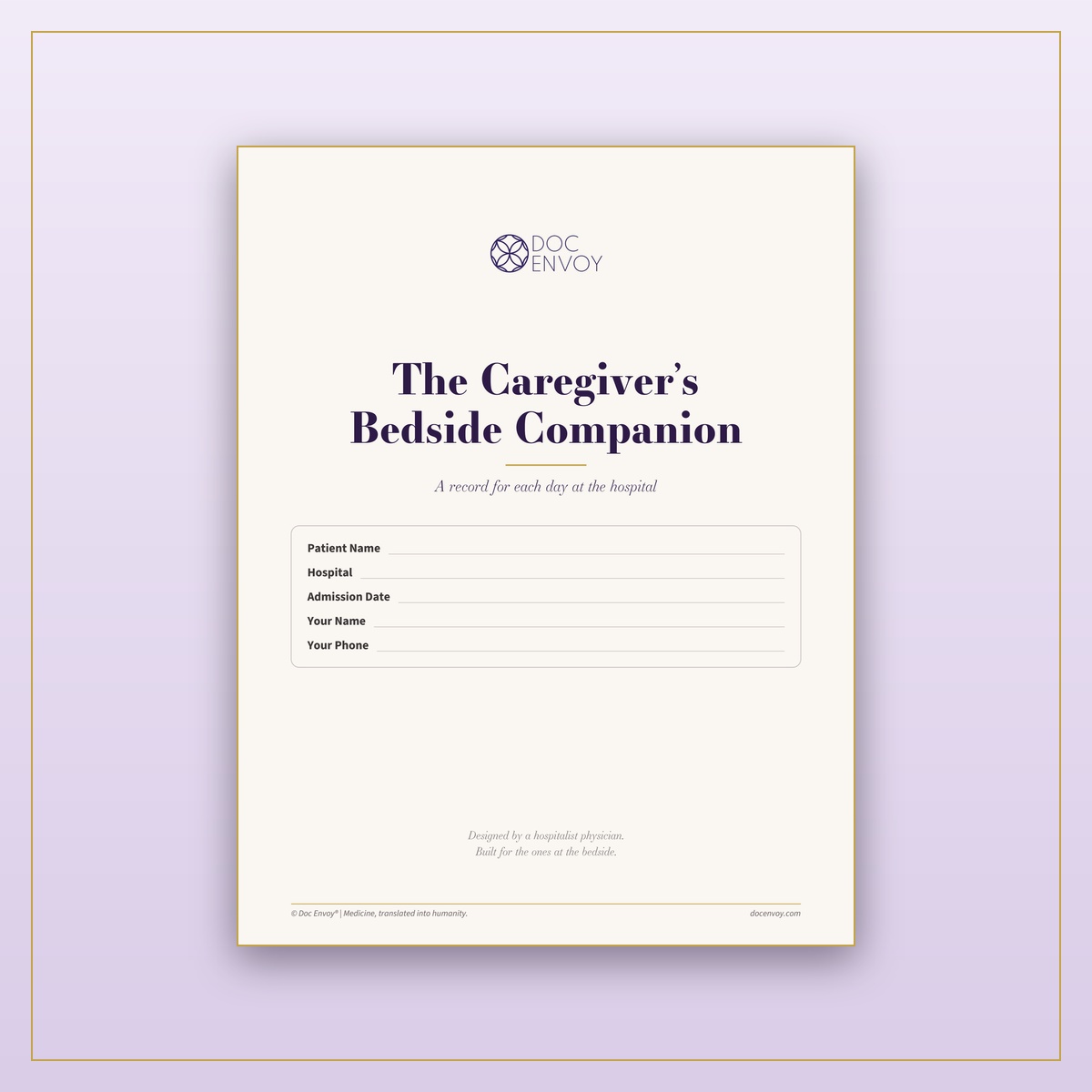
The Caregiver's Bedside Companion
A companion the family member or caregiver uses at the bedside during a hospital stay.
The Caregiver’s Bedside Companion is built for the family member or caregiver sitting at the bedside. It is a structured place to track what physicians said, what changed overnight, what to follow up on, and what you want to bring forward in the next conversation with the care team. The caregiver edition contains more pages per day than the patient edition, reflecting the additional tracking caregivers are often doing.
What’s included:
- Four complete day sets, each with four pages: the morning team and your questions, rounds and results, the rest of the day including case management, and an end-of-day reflection
- Notes pages for what falls outside the daily structure
- “Things You Can Consider Saying to Your Care Team,” a section of caregiver-voiced phrases for asking for what the patient and family need
- A fillable PDF you can type into or print at home; a longer stay is covered by saving a second copy of the file or printing additional day sets
Price: $29
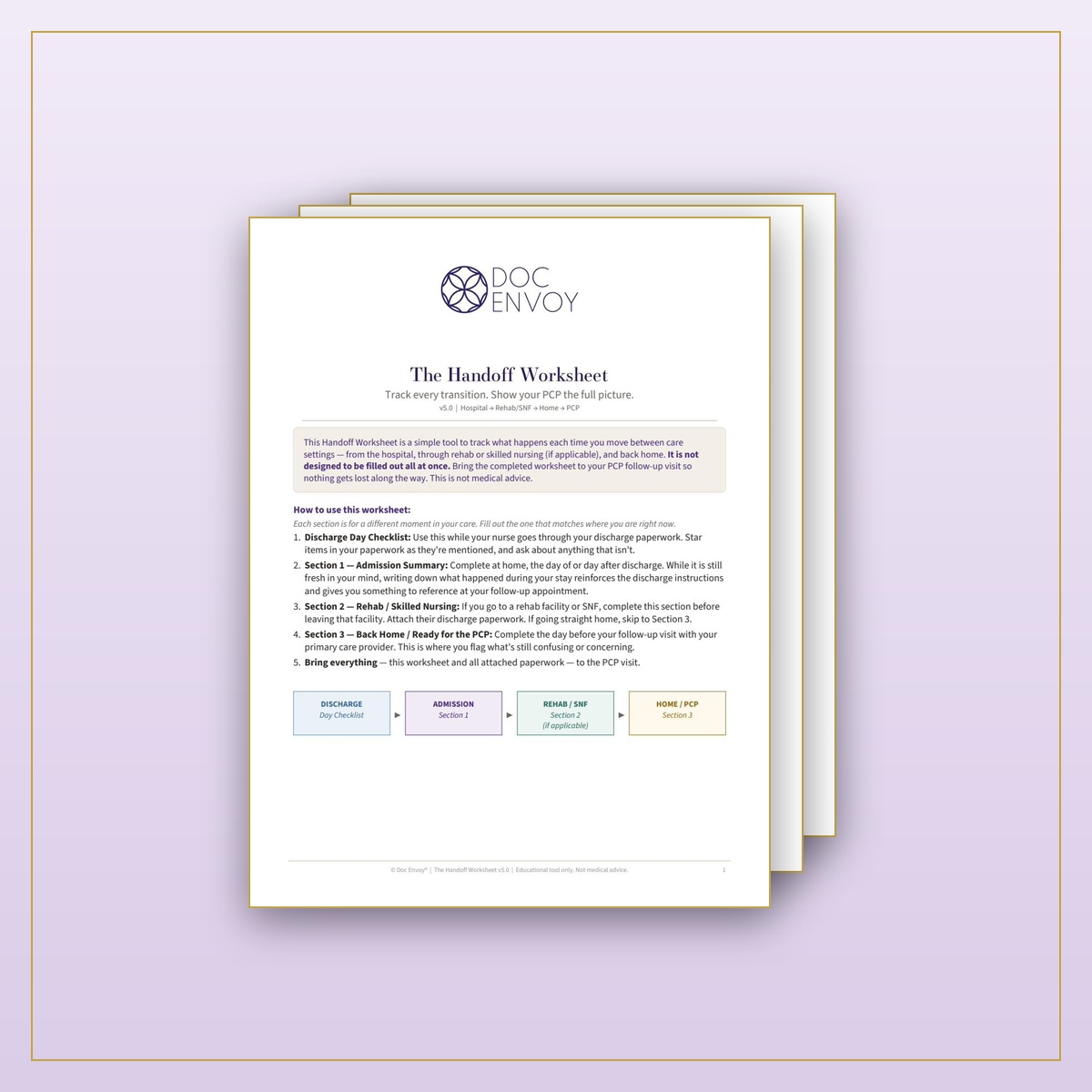
Handoff Worksheet Bundle
Three tools for the moments when care moves between settings and the patient’s voice is at risk of being lost.
Care transitions are where information is most likely to be lost between physicians, and where small misunderstandings can become real problems. The Handoff Worksheet Bundle is three tools for keeping your experience, understanding, and open questions in one place, in your own words. When you bring a completed worksheet into your primary care follow-up, your physician sees the hospital stay from your perspective, and the fifteen minutes of that appointment go toward what actually matters.
This is also the Handoff Worksheet used inside Doc Envoy’s Discharge Envoy engagements.
What’s included:
- Handoff Worksheet, a fillable PDF that captures the patient’s understanding of what happened in the hospital, points of confusion, and what the patient sees as the open questions for the primary care physician
- Your First 72 Hours Home, a day-by-day guide to the first three days after discharge, when symptoms and confusion are most likely to surface and to need attention before the next appointment
- What Happened in the ED, a single-page fillable PDF for patients sent home from the emergency department
Price: $39
From the Channel
Stephanie’s YouTube channel, Your Friendly Neighborhood Hospitalist, sits alongside Doc Envoy as a more conversational space. Most of the content is hospital-focused, what patients and families wish they understood about what happens during a stay, with some Doc Envoy-specific material in the mix. Follow along if you would like a physician’s perspective in shorter, less structured form than the products on this page.